

 +8613303827570
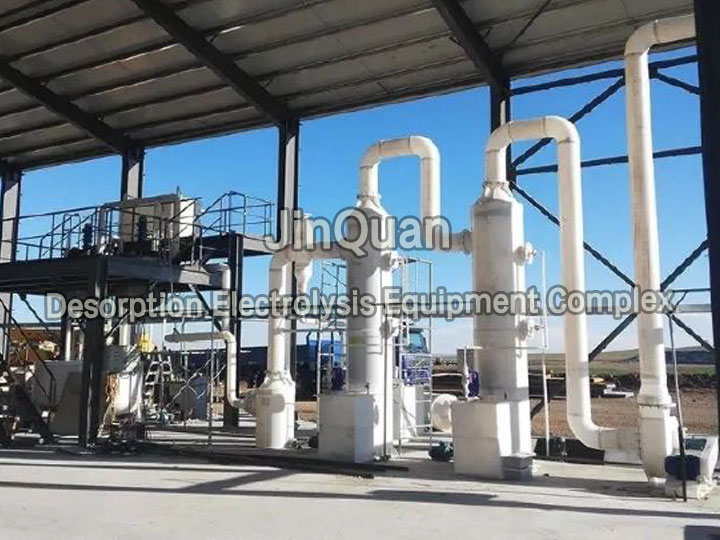
Features of desorption electrolysis equipment complex:
Desorption electrolysis equipment complex is a kind of key equipment in the cyanidation carbon-in-pulp gold refining process in gold mines. lt is a kind of integral equipment complex consisting of electric heater, desorption post, heat exchanger, whole electrolytic bath, and pump, with the features like compact structure, convenient installation, desorption rate reaching 96% and over, and electrolysis rate more than 99%.
Notes for selection:
We can design and make the products of different specifications according to the customer’s requirements.
Technical parameter list of movable desorption electrolytic equipment:
解吸率(%) Desorption rate | 电解率(%) Electrolysis rate | 装机容量(kw) Installed capacity | 解吸温度(℃) Desorption temperature | 电解电压(v) Electrolysis volt | 电解电流(A) Electrolysis current | 生产能力 (kg/批) Productive capacity | 电解液流量 (t/h) Electrolysis equid flow |
>96 | 99 | 30 | 95 | 1.5-3(直流) | 200 | 300 | 1.5 |
-
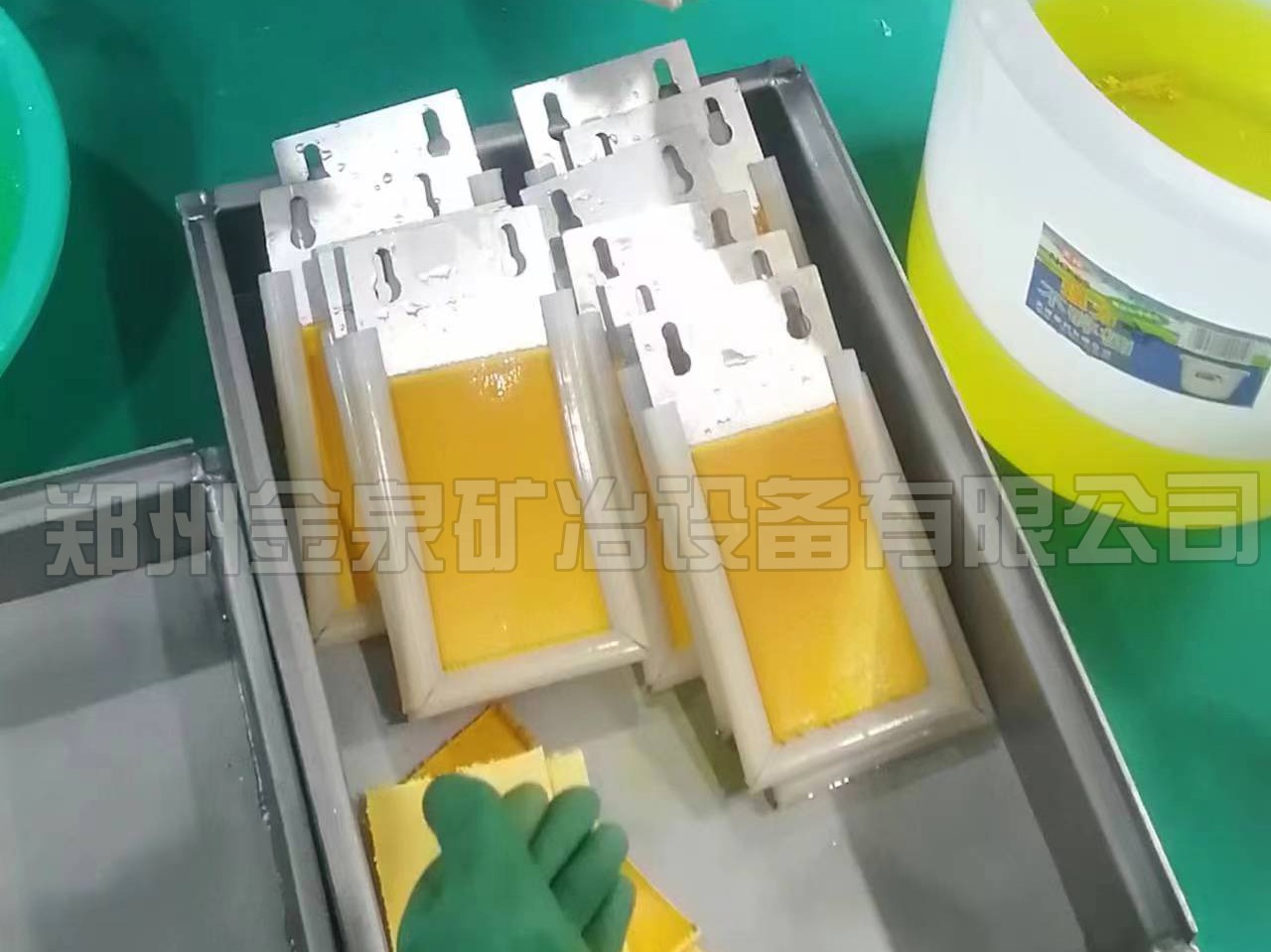 Recovery Of Gold By Displacement With Copper WireRecovery Of Gold By Displacement With Copper Wire
Recovery of gold by displacement with copper wire (or copper chips) under heating. For gold-containing chloride waste solutions, copper wire (or copper chips) are generally used to recover gold by displacement under heating.
In addition, the electrolytic method can be adopted to recover gold from waste plating solutions with high gold content, while for waste solutions and washing water with low gold content, activated carbon adsorption and ion exchange adsorption methods are available to recover gold.
-
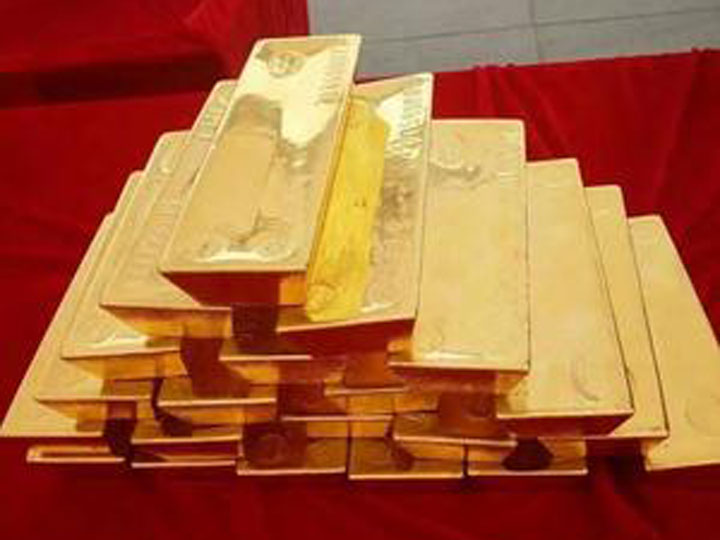 Recycling Method for Noble Metal LinersRecycling Method for Noble Metal Liners
Cleaning and Recycling Method for Noble Metal Liners In the manufacturing process of semiconductor chips, the cleaning and recycling method for noble metal liners proceeds as follows: first, the environment-friendly gold-leaching reagent solution and alkaline agents are purified, followed by complete dissolution of the surface gold plating.
Next, dissolution of other plated metals is conducted to complete the stripping of the plating layers; finally, gold is extracted and recovered, and the liner substrate undergoes ultrasonic non-destructive cleaning. The liner substrate is then dried under vacuum, and after passing the surface appearance quality inspection, it is packaged in vacuum and stored in the warehouse.
This method features the advantages of achieving noble metal recovery without damaging the liner substrate, simple and efficient operation, and safe and environmentally friendly working procedures.
-
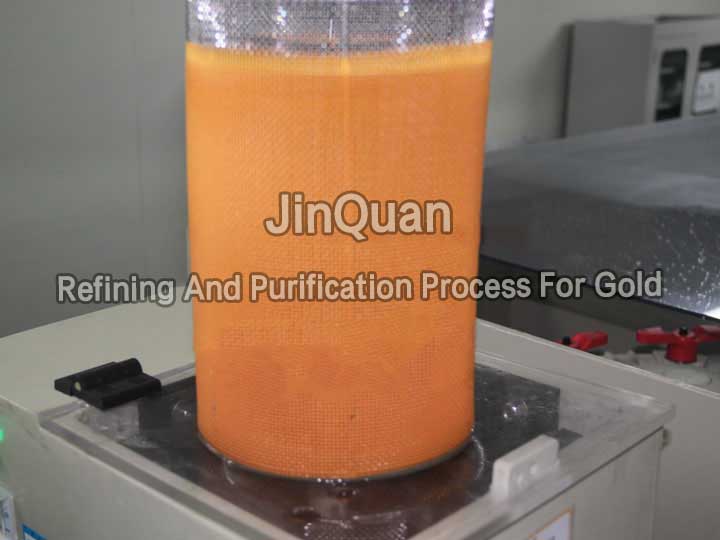 Gold Recovery From Gold-bearing Waste LiquorsGold Recovery From Gold-bearing Waste Liquors
Gold-bearing waste liquors include electroplating waste effluents, which are mainly composed of waste cyanide gold plating solutions, waste ammonium gold sulfite gold plating solutions, aqua regia etching waste liquors, chlorination waste liquors, and various gold-bearing rinse waters.
Electroplating waste liquors have a relatively high gold concentration: that of acidic gold plating waste liquors generally ranges from 4 to 12 g/L, while the concentration of alkaline gold plating waste liquors can reach up to 20 g/L.
Available methods for gold recovery from gold-bearing waste liquors are as follows:
(1) Recover gold from cyanide gold-bearing waste liquors via the zinc (aluminum) cementation process, using zinc wire or zinc powder as the precipitant.
(2) Recover gold from waste ammonium gold sulfite gold plating liquors via the pH adjustment method.
(3) Recover gold from aqua regia etching waste liquors.
(4) Recover gold via heated cementation with copper wire (or copper turnings) as the precipitant.